Name the restriction correctly
A minimum quantity sets a lower limit. A selling pack size determines how many units come in each purchase pack. An order multiple can impose another step size. These are different conditions. Do not infer that a minimum of48means every order must be a multiple of48unless the actual seller establishes that rule for the selected product.
Use the selected examples
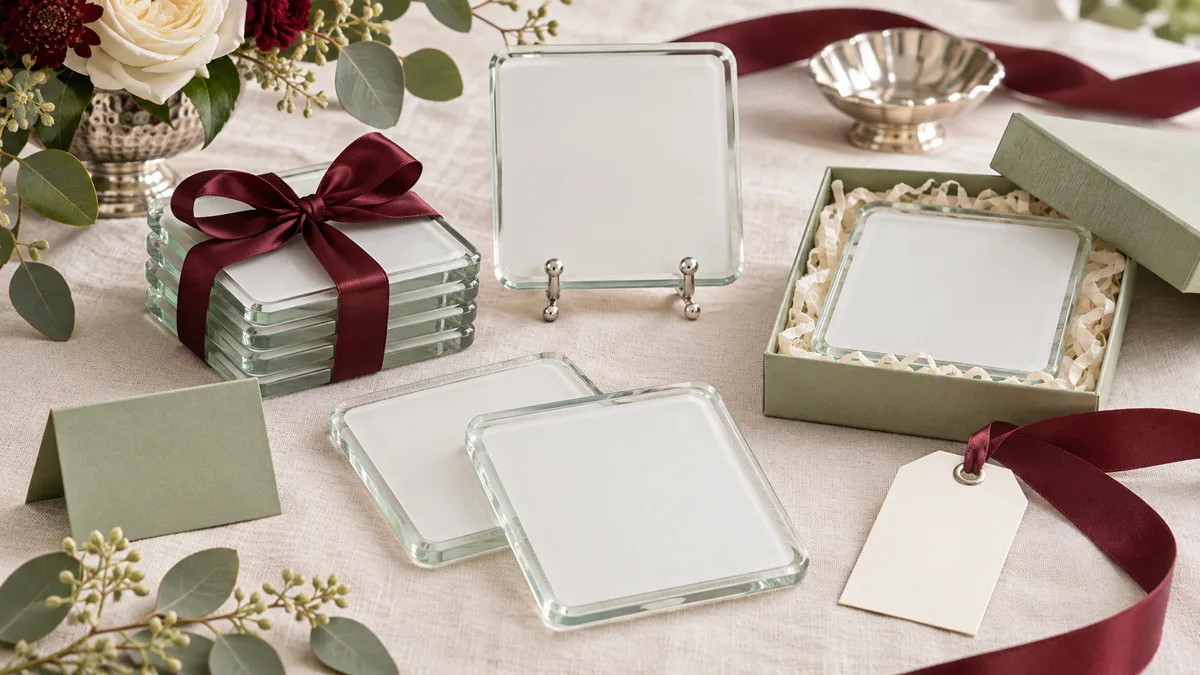
The personalized glass coaster states a48-piece minimum and a per-piece price. The empty jar offer is sold in sets of18. The cork favor contains four coasters but is one presented set. Each record requires a different quantity interpretation. A single generic pack-size field would conceal those distinctions and can produce the wrong basket.
Keep unverified increments pending
For the selected personalized glass page,we have not verified a separate current order-multiple rule beyond the stated minimum. The calculator therefore enforces the documented minimum without claiming that an arbitrary increment has seller approval. Before checkout,confirm the actual quantity selector and any current restrictions. A displayed calculation is not evidence that the seller will accept every entered quantity.
A target below minimum
If the intended allocation is30personalized glass favors,the documented minimum produces48pieces,18above target. This does not require changing the guest count or pretending that18pieces are a recommended contingency. It shows a purchasing consequence of the selected offer. The planner can reconsider the product or seek a verified seller quote rather than hiding the excess.
A pack-rounding case
If the target is50empty-jar favors,the18-pack format requires three packs,54jars. That4-piece overage is caused by the selling pack. It is different from a minimum-order overage and from explicitly chosen extras. Keeping each reason visible makes the order easier to review and helps prevent an accidental extra pack.
Do not transfer rules between sellers
Another retailer may sell a different pack arrangement or apply different personalization requirements. The same brand name does not make those transaction conditions identical. Keep exact seller,SKU,selected variant,count and observation date together. A family search snippet is insufficient to establish the full quantity rule for a specific current offer.
Before a final order
Review the actual cart's selling units and selected quantity,then compare them with the allocation target. Confirm current minimums,increments,setup fees and optional components. If any condition is unclear,ask the seller rather than forcing the calculator's number into the checkout. No order is submitted by this site,and independent content and commerce review remain pending.
Keep zero demand distinct from a minimum order
If the user enters no chosen recipients and no extras,the allocation tool returns zero selling units rather than automatically buying the minimum. A minimum applies to a positive intended purchase,not to a decision to order nothing. If the target later becomes positive,the selected restriction is applied again. This distinction avoids a surprising order recommendation from an empty plan. It also makes clear that the tool models a quantity decision without committing the user to a seller transaction.
Sources & scope
Checked November 4, 2026. Manufacturer and retailer references support the specific statements. Dated displayed prices are not final checkout quotes, performance rankings or performance testing. This shopping reference does not replace the exact product label or qualified individual advice. Exact selected options,proof workflow and independent content/commerce review remain pending.
Kate Aspen: Personalized Glass Coasters,P24CUSTOM-AS9703 ↗
Keep reading
Four cork coasters form one presented favor set ↗
An18-jar pack supplies empty containers,not18completed favors ↗
Personalized glass coasters:48-piece minimum and a separate setup fee ↗